

AI in Recruitment for Filtering, Ranking, and Scheduling
- HiRi.ai

- 3 days ago
- 3 min read
Updated: 2 days ago
The modern recruitment landscape is characterized by high volume and complexity. Talent acquisition teams often struggle with sifting through thousands of applications, managing complex global scheduling across time zones, and ensuring unbiased shortlisting. Artificial Intelligence (AI) has emerged as a critical technology to address these challenges, moving beyond simple automation to provide strategic intelligence across the core phases of the hiring funnel: filtering, ranking, and scheduling.

1. Intelligent Candidate Filtering: Moving Beyond Keywords
Traditional candidate screening relies heavily on keyword matching and often leads to a high volume of false positives or the accidental exclusion of qualified candidates who lack conventional resume formatting. AI refines this filtering process significantly:
Semantic Matching: Unlike simple keyword searches, AI uses Natural Language Processing (NLP) to understand the context and meaning (semantics) within resumes, cover letters, and application answers. This allows the system to recognize that "developed cloud architecture" is functionally equivalent to "designed AWS solutions," providing a much more accurate initial filter.
Structured Data Extraction: AI models are highly efficient at extracting, standardizing, and structuring data from diverse formats (PDFs, plain text, LinkedIn profiles). This creates a consistent and comparable data set, which is crucial for subsequent ranking steps.
Compliance and Pre-screening: Many AI platforms integrate preliminary compliance checks and automated, customized pre-screening questions that filter out candidates who clearly lack basic legal requirements or essential certifications before human review is needed.

2. Objective Candidate Ranking: Skills-First Prioritization
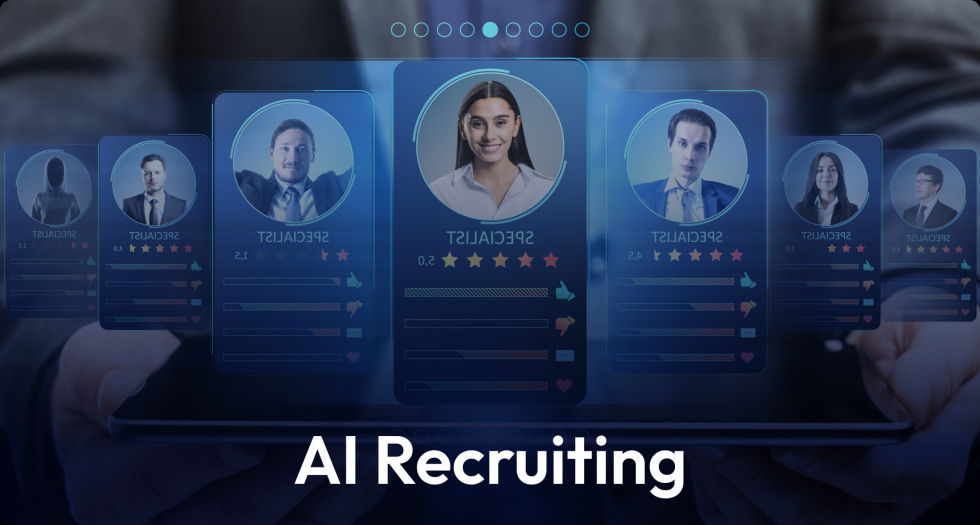
Candidate ranking is arguably the most strategic application of AI in recruitment. It transforms a subjective shortlisting process into a data-driven one, primarily driven by a skills-based approach and predictive algorithms.
Performance-Based Modeling: Advanced AI systems build proprietary models by analyzing the profiles of an organization's most successful current employees—those who demonstrate high performance, low turnover, and a strong cultural fit. The AI then ranks new candidates based on their likelihood to match these success profiles.
Skills Gap Analysis: Leveraging sophisticated Skills Taxonomies and proficiency levels, AI ranks candidates not just on past roles, but on the granular skills required for the specific vacancy. This ensures the focus remains on capability, aligning directly with the principles of Skills-Based Hiring.
Mitigating Bias: When properly trained and audited, AI ranking systems can help reduce human unconscious bias by prioritizing objective criteria defined by job requirements, rather than relying on subjective cues like university pedigree, gender, or age.

3. Automated Interview Scheduling: Enhancing Candidate Experience
Scheduling is a notoriously tedious and frustrating aspect of recruitment, often cited as a pain point that damages the Candidate Experience. AI streamlines this process entirely:
24/7 Availability: AI scheduling tools—often integrated as Conversational AI or chatbots—operate around the clock, allowing candidates in any time zone to instantly view and book available interview slots based on the recruiter's and hiring manager's calendars.
Real-Time Conflict Resolution: The system automatically checks and reserves time on calendars and generates meeting links (e.g., Zoom, Teams). If a conflict arises, the AI proactively communicates with the parties to reschedule, eliminating the need for back-and-forth emails.
Logistical Automation: Beyond booking, the AI manages all logistical steps, including sending confirmation emails, personalized preparation materials, and automated reminders to both the candidate and the interviewer, significantly improving show-up rates.

AI is reshaping the recruitment function by providing the intelligence needed to handle high-volume administrative tasks with speed and accuracy. By excelling in filtering, ranking, and scheduling, AI allows recruiters to shift their focus from process management to human interaction and strategic decision-making. This not only drives operational efficiency but also ensures a fairer, faster, and more engaging experience for every candidate.
While AI systems drastically enhance talent acquisition speed and precision, the true organizational advantage is realized when these efficiencies extend throughout the employee lifecycle. To understand how automation transforms tasks from payroll to compliance and elevates HR to a strategic role, explore our detailed analysis on The Efficiency Engine: HR Automation and Trending Applications.


Comments